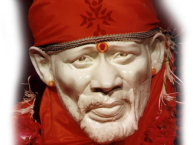





SaiBaba's Nature and Personality
It is on account of Sai Baba that Shirdi grew into importance.
It is interesting to study what sort of (a personage) Sai Baba
was.
Sai Baba conquered this Samsar (worldly existence), which is like a deep sea, very difficult and hard to cross. Peace or mental calm was His ornament and He was the repository of wisdom. He was the home of Vaishnava and Shiva devotees, most liberal (like Karna) amongst liberals, the quintessence of all essences. He had no love for perishable things and was always engrossed in self-realization, which was His sole concern. He felt no pleasure in the mandane things of this world or of the world beyond. His Antarang (heart) was as clear as a mirror and His speech always rained nectar. The rich or poor people were the same to Him. He did not know or care for honor or dishonor.
Baba was the Lord of all beings. He spoke freely and mixed with all people, saw the acting and dances of ‘Nautchgirls’ and heard Gazhal songs. Still, He swerved not an inch from Samadhi (mental equilibrium). The name of Allah was always on His lips. While the world awoke, He slept; and while the world slept, He was vigilant. His abdomen (Inside) was as calm as the deep sea. His Ashram (life-stage) could not be determined, nor His actions could be definitely determined and though He sat (lived) in one place, He knew all the transactions of the world. His Darbar was imposing. He told daily hundreds of stories; still He swerved not an inch from His vow of silence. He always leaned against the wall in the Masjid or walked morning, noon and evening towards Lendi (Nala) and Chavadi; still He at all times abided in the Self. Though a Siddha, He acted like a Sadhaka. He was meek, humble and egoless, and pleased all. Such was Sai Baba, and as the soil of Shirdi was trodden by Sai Baba’s Feet, it attained extraordinary importance.
Sai Baba did not mix and speak with the people. He only gave answers when he was questioned. By day he always sat under the Neem tree, sometimes under the shade of a branch of a Babul tree near the stream at the outskirts of the village.
Many Sanyasis, Sadhakas and all sorts of men aspiring for salvation came to Sai Baba. He always walked, talked and laughed with them and always uttered with His tongue ‘Allah Malik’ (God is the sole owner). He never liked or encouraged discussion or arguments. He was always calm and controlled, though irritable at times, always preached full Vedanta (knowledge) and nobody knew till the last the real Baba.
Dress Demeanor and Daily Routine
His demeanor was quiet and sober. However on occasions
he used to get ruffled because of some suggestion of calamity
or evil in HIS devotees life. He did not talk frequently and was
in trance. His eyes penetrating skies. Since his young days, Sai
Baba grew hair on His head, never had His head shaved. He used
to wear a piece of white cloth round His head along with a long
flowing Kafni. The piece of white cloth on the head was twisted
like matted hair and flowed down from the left ear on the back.
This was not washed for weeks. He wore no shoes, no sandals. A
piece of sackcloth was His seat for most of the day. He wore a
coupin (waist-cloth-band) and for warding off cold he always sat
in front of a Dhuni (sacred fire) facing South with His left hand
resting on the wooden railing. While sleeping at Chavadi Baba
used to rest HIS head on a brick.
Sai Baba visited certain houses daily and went from door to door where He stood as a beggar and called out, "Oh Mai, give Me a piece of bread" and spread out His hand to receive the same. In one hand He carried a Tumrel (tinpot) and in the other a zoli or choupadari, i.e., a rectangular piece of cloth as food collecting bag. Liquid or semi-liquid things such as soup, vegetables, milk or buttermilk were received in the tinpot, while cooked rice, bread, and such solid things were taken in the Zoli. Baba's tongue knew no taste as He had acquired control over it. Whatever things He got in His Zoli and in the tinpot were mixed together and partaken by Baba to His heart's content. The food collected was poured into Kolamba - a stone pot and animals and birds used to cluster around the pot to eat food. Baba never prevented them from eating.
Baba begged till noon, but His begging was very irregular. Some days He went a few rounds, on other days up to twelve noon.
In the afternoon, He used to walk at random and go at times to neighboring villages where He used to frequent the houses of some of His devotees.
Style of Teaching
As for Sai Baba’s style of teaching, He did not
deliver lectures and rarely gave formal teachings. He has never
written anything by way of wordy philosophy. Rather, He taught
orally by parable, direct experience and the example of His own
life. He assures all that each could experience. His Devine Love
and blessings flew directly and not through any intermediary.
All would experience fulfillment of their worldly desires and
also perfect satisfaction of their craving for self realization
(AATMA BODHA). There is no exception to this experience.
Baba’s way is to cater directly to the needs of each individual and He did not require His devotees to take up any rituals or conventionally prescribed practice, nor did He favoured any particular path over another. Baba generally discouraged people from changing their chosen form of worship in GOD and never advised total detachment from worldly life and changeover of preference for a particular deity as GOD. He advised perfect loyalty in and faith in the power and blessings of the Almighty (ALLAH MALIK) and patience for the results of action (KARMA). As a result of Baba's grace, devotees experience self-generated conviction and faith that whatever their desires and aspirations are, they will never go unnoticed by Baba and they would not return empty-handed from SAI-COURT (DARBAR).